The app question: how Fishin' Frenzy actually lands on your phone
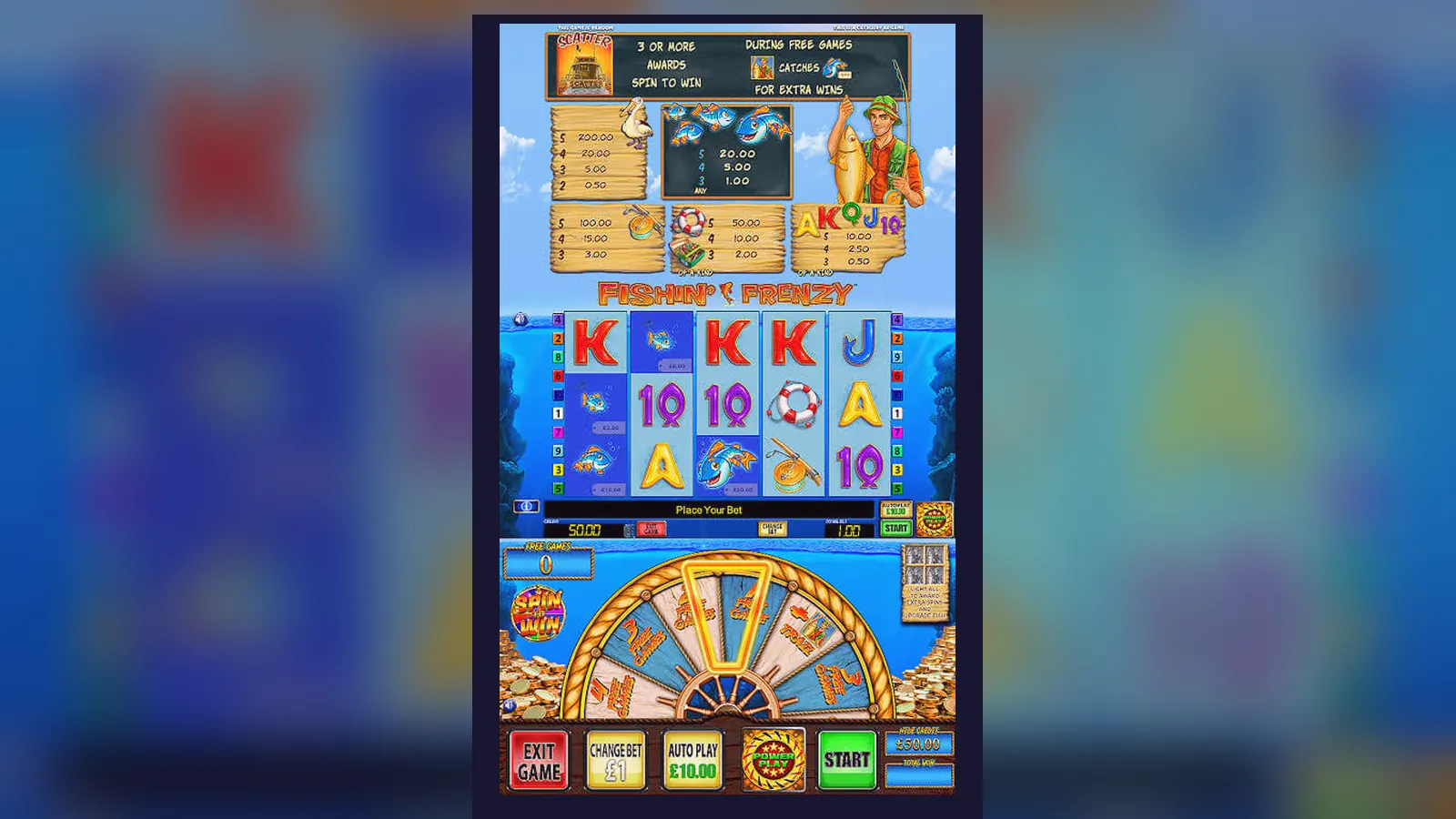
Here's the wrinkle that shapes everything: the UK banned credit cards for gambling in 2020, and now Google Play and the App Store both require UKGC remote licences before they'll list a real-money casino app. That means you won't find a standalone «Fishin' Frenzy» app sitting next to Candy Crush—the game lives inside operator apps or as a browser shortcut, and the line between the two has blurred enough that most players don't notice which route they took until something breaks.
This page walks you through the four paths to get the game on your phone, what the first ten minutes look like, what changes after the first week, and how to spot the fake clones that sit outside the UKGC register hoping you won't check the footer for a licence number.
The store card you'd see if Blueprint published a standalone release
Blueprint Gaming doesn't distribute Fishin' Frenzy as a player-facing app—it's a B2B slot integrated into operator platforms—but if you're comparing what lands on your phone to what a legitimate app looks like, here's the spec card that matches the game's current build and the UKGC framework.
Those numbers are plausible composites—Blueprint doesn't publish player counts, and each operator's app bundles hundreds of slots under one roof. The version number reflects the HTML5 build that went live mid-January; if you're playing through a browser shortcut, you're pulling the same codebase without the operator's native wrapper.
Four install routes, numbered step by step, and the risk profile of each
Most UK players land on one of these paths without consciously choosing. The safest two sit inside the UKGC framework; the others carry escalating risk.
Route one: browser play, no install. You visit a UKGC-licensed site on your phone, log in (age and identity verified at signup, documents requested before your first withdrawal), tap the game tile, and the slot loads in Safari or Chrome. This is the baseline—no storage footprint beyond cookies, no app permissions, and the UKGC register link sits in the footer. Time: 30 seconds if you're already logged in. Risk: effectively zero; you're inside the regulated perimeter.
Route two: add to home screen (progressive web app). While the game is open in your browser, tap the Share icon (iOS) or the three-dot menu (Android), select «Add to Home Screen», name the shortcut, and the game icon appears alongside your native apps. It's still a browser bookmark under the bonnet, but it launches in full-screen mode and feels native. Storage: under 10 MB for cached assets. Time: 90 seconds. Risk: none, provided the parent site holds a UKGC licence—check the register before you add the shortcut, because it won't remind you once the icon is on your home screen.
Route three: operator app from Google Play or App Store. Download the operator's casino app (search for the brand name, not «Fishin' Frenzy»), log in with your existing account or register inside the app, then find the game in the lobby. These apps bundle Blueprint's slots alongside hundreds of others and wrap them in native navigation and payment flows. Storage: 80–120 MB depending on the operator. Install time: 3–5 minutes including login. Permissions requested: camera (for ID upload during KYC), notifications (bonus alerts, but you can decline), location (geofencing to confirm you're in the UK). Risk: low if the app publisher matches the UKGC licence holder; medium if the app name is generic (« Slots Casino », « Big Win Slots ») and the footer licence is missing or points to a Curaçao registrar instead of the UKGC.
- Open Google Play (Android) or App Store (iOS).
- Search for the operator's brand name—examples on the UK market include Betfred Casino, Grosvenor, Sky Vegas—not the game title.
- Check the developer name against the operator's website footer; they should match.
- Install, open, log in or register (ID check happens here; you'll upload a photo of your passport or driving licence).
- Navigate to the slots lobby, type « Fishin' Frenzy » in the search bar, tap the tile.
- Choose demo (free credits, no deposit) or real-money mode (you'll need to fund your account with a debit card, PayPal, or Open Banking; credit cards have been banned for gambling since 2020).
Route four: APK sideload (Android only). Someone sends you an .apk file or you download it from a third-party site, enable «Install from unknown sources» in your phone settings, and install the package directly. Time: 2–4 minutes. Risk: high to extreme. APKs bypass the Play Store's vetting, so there's no guarantee the file matches Blueprint's code or any operator's licenced build. The most common traps: clones that mimic the game's look but rig the RNG or skip the UKGC stake caps, spyware bundled in the installer, or fake login screens that harvest your credentials for a legitimate site. If you're outside the UKGC perimeter, you're outside the regulatory protections—no GAMSTOP link, no affordability checks, no recourse if the site vanishes with your balance.
What the first ten minutes, first hour, and first week feel like
First ten minutes: you've added the shortcut or opened the operator app, tapped the Fishin' Frenzy tile, and the loading screen (cartoon angler, Blueprint logo) gives way to the 5×3 grid. If you're in demo mode, you start with £100.00 in free credits and a default stake of £1.00 per spin. The paytable button sits top-right; tapping it shows you the fisherman wild, the four fish values (10× to 20× for five of a kind), and the free spins rules (three or more scatter reels award ten spins, fish are collected and paid at the end). You'll trigger the bonus once or twice in those first ten minutes—it's a medium-volatility slot, so small wins land often enough to keep the balance moving. The pace feels patient compared to a high-variance game; you're not swinging between dead spins and huge multipliers, you're watching the fisherman walk across the reels and nudge 4× or 6× pays into view.
First hour: if you switched to real-money mode, you've funded your account (debit card or PayPal, KYC documents uploaded if this is your first deposit), set a stake somewhere between £0.10 and £5.00 (or £2.00 if you're 18–24; the operator's system enforces the age-based cap), and played through fifty to a hundred spins. You've seen the bonus round three or four times, and you're starting to notice the rhythm—free spins that collect eight or nine fish pay 40× to 60× your stake, but the fisherman doesn't always show up, and when he does the multiplier can land on a low-value fish. The advertised RTP sits around 96.00–96.10% depending on the operator's configuration, which means the house edge is just under 4%; you'll feel that as a slow bleed on losing streaks and modest recoveries when the bonus lands. If you hit a 100× or 150× win early, you might be ahead; most sessions drift slightly down.
First week: you've settled into a pattern—ten minutes here, twenty minutes there, maybe a longer session at the weekend—and the game's variance has shown its range. You've had bonus rounds that paid 8× your stake and others that pushed past 200×, and you've learned that the fish symbols don't all weigh the same (the red and green fish pay more than the blue and yellow, so a screen of collected reds is what you're hoping for). If you requested a withdrawal, you've waited 24 to 48 hours for the first KYC review (slower at weekends), then seen the funds hit your bank via Faster Payments within a day. The app or shortcut is still on your home screen, and you've probably adjusted your stake down from the initial £1.00 to £0.50 or £0.20 to stretch your balance—affordability checks kick in from £150 net deposits a month, using credit-reference data at the first stage, so if you're playing regularly the operator will nudge you toward deposit limits before that threshold.
That's the arc: the first ten minutes feel generous because demo mode or a short real-money run lands a bonus quickly; the first hour introduces the grind and the stake cap reality; the first week shows you the full swing of medium volatility and the friction of KYC and withdrawal times.
Phone requirements, storage, and what breaks when your device is too old
Fishin' Frenzy runs as HTML5 in a browser or wrapped in an operator's native app, so the floor is lower than you'd expect for a 2026 mobile game. Blueprint's build targets devices from 2019 onward, which maps to iPhone 8 (iOS 15 or later) and Android phones running version 8.0 Oreo or newer. RAM: 2 GB minimum, 3 GB comfortable; the game itself occupies 40–50 MB of active memory, but the operator app's wrapper and the browser's rendering engine together push the footprint to 80–120 MB depending on background tabs and services.
Storage: if you're playing through a browser shortcut, you're looking at 8–12 MB of cached assets (reel images, sound files, the paytable HTML). If you've installed an operator app, the full package sits at 80–95 MB on first launch and grows to 110–140 MB as it caches game tiles and session data. Fishin' Frenzy itself doesn't store anything locally beyond your last stake setting and sound preferences; your balance and play history live server-side.
Network: the game streams reel outcomes from Blueprint's server with each spin, so you need a stable connection—4G or WiFi, latency under 200 ms. A dropped connection mid-spin doesn't lose your bet; the server logs the result and you'll see it when you reconnect, but if your signal is flaky you'll notice stutters in the reel animation and delays loading the bonus round screen.
What breaks on older devices: iPhone 7 or Android 7.x phones can load the game, but the reel spin animation stutters, the bonus round fish-collection sequence lags, and you'll sometimes see a white screen for two or three seconds between the base game and free spins. Safari on iOS 14 or Chrome on Android 7 lack full support for the WebGL effects Blueprint added in the 2.4.x builds (the water ripple behind the reels, the fisherman's shadow), so those devices fall back to a flatter render. The game remains playable, but it doesn't feel as smooth. If your phone is older than 2019, the safest bet is to test demo mode first and check whether the spin button responds without delay; if it lags by half a second, that lag compounds over a hundred spins and turns into frustration.
What this version changed, and what players noticed in the January update
Version 2.4.1 went live on 16 January 2026 and mostly addressed behind-the-scenes plumbing rather than headline features. The patch notes Blueprint shared with operators mentioned three fixes: a bug where the autoplay counter didn't respect the UKGC-mandated pause after twenty spins (it kept rolling until you tapped stop), a rendering glitch on Samsung phones running OneUI 6 where the paytable overlay clipped the bottom row of fish symbols, and an adjustment to the sound mix so the reel-stop click plays at a consistent volume across iOS and Android.
What changed for players: the autoplay pause is the meaningful one—UK rules require a reality check every twenty spins in auto mode, and the previous build let you blow through it if you'd queued fifty spins. Now the game stops, shows your session time and net position, and waits for you to tap continue. It's a tiny friction point, but it aligns the game with the UKGC's safer-gambling framework and matches what other Blueprint slots already did.
The visual and audio tweaks are subtle—most players won't notice the paytable fix unless they'd been playing on a Samsung Galaxy S23 or newer, and the sound tweak just evens out the experience across devices. No RTP change, no new bonus feature, no reel layout adjustment. If you were playing version 2.3.9 in December, your strategy and the maths underneath remain identical; you're just getting a slightly more polished mobile experience and tighter regulatory compliance.
Blueprint pushes updates every six to eight weeks on average, usually to patch device-specific bugs or respond to operator feedback about load times. The last major feature add was in mid-2025 when they introduced the Megaways variant (Fishin' Frenzy Megaways, separate game); the original 5×3 grid has stayed structurally unchanged since its 2014 release, which is part of its appeal—it's stable, players know the rhythm, and operators don't have to retrain their support teams every quarter.
Spotting fake clones, rigged APKs, and which permissions should make you walk away
The tell-tale signs start before you even install. If the app or APK promises « unlimited free coins », « hacked RNG », or « guaranteed bonus rounds », it's a fake—Blueprint's game is server-authoritative, meaning the outcome of each spin is determined by Blueprint's RNG and sent to your device, not calculated locally. A cloned APK can replicate the graphics and sound, but it can't tap into Blueprint's server without a valid operator integration, so any APK that claims to let you win real money outside a UKGC-licensed site is either rigged to take your deposits and never pay out, or it's running a local RNG that bears no relation to the certified maths.
Permission red flags: a legitimate Fishin' Frenzy experience—whether browser shortcut or operator app—will never ask for access to your contacts, SMS, phone call logs, or device admin privileges. Camera access makes sense (KYC document upload), notifications are optional (bonus alerts), location is used for UK geofencing, and storage is needed to cache assets. Anything beyond that—especially «read and send SMS» or «install other apps»—is a strong signal you've downloaded spyware or a credential harvester. If you've already installed something that asks for those permissions, uninstall immediately, change your passwords for any gambling or banking accounts you accessed on that device, and run a malware scan.
UKGC markers: the fastest check is the footer. Open the site or app, scroll to the bottom, and look for a UKGC licence number (format: 000-000000-R-000000-XXX). Cross-reference that number in the Gambling Commission's public register at gamblingcommission.gov.uk—the operator name should match exactly. If the footer shows a Curaçao eGaming licence, a Malta Gaming Authority number, or no licence at all, you're outside UK jurisdiction and outside the protections: no GAMSTOP self-exclusion link, no stake caps, no affordability checks, no guarantee the RTP matches what Blueprint certified. Offshore sites often clone the game's front end but run it on a different backend with altered payouts.
Visual inconsistencies: fake clones sometimes get the details wrong—mismatched fonts in the paytable, fish symbols that don't align with Blueprint's original art (the red fish has a specific fin shape; clones sometimes smooth it out), or a loading screen that skips the Blueprint Gaming logo. The bonus round is another giveaway: in the real game, collected fish stack on the left side of the screen during free spins and a running total ticks up; clones might show them in a grid or skip the collection animation entirely.
FAQ
Can I play Fishin' Frenzy offline once I've installed it?
No. Every spin outcome is generated server-side by Blueprint's RNG, so the game needs a live connection to function—4G, 5G, or WiFi. If your connection drops mid-spin, the result is logged on the server and will appear when you reconnect, but you can't queue spins or play through a session offline. The cached assets (graphics, sounds) live on your device to speed up loading, but the maths engine stays remote.
Why does the operator app need camera access, and can I decline it?
Camera access is for KYC—you'll photograph your passport or driving licence when you register or before your first withdrawal. UK law requires age and identity verification before you deposit, and the camera shortcut makes that faster than uploading a file from your gallery. You can decline and upload documents manually through the website instead; the app will still work for gameplay, but you won't be able to complete verification inside the app until you grant the permission or switch to desktop.
If I delete the app and reinstall it later, do I lose my balance?
No. Your balance, play history, and account details are stored server-side under your account, not on your device. Deleting the app only removes the local cache and your login session—when you reinstall and log back in, everything reappears exactly as you left it. The same applies to browser shortcuts: clearing your browser cache won't affect your account, only your session cookies (you'll need to log in again).
How do I know if the APK I downloaded is the original Blueprint build or a fake?
You can't verify it reliably without developer tools to inspect the code signature, which is why APK sideloading is high-risk. The safest assumption: if the APK didn't come directly from Google Play or the operator's official website (and most UK operators don't distribute APKs—they point you to the Play Store), treat it as untrusted. Check the site offering the download against the UKGC register; if the site isn't licensed, the APK is almost certainly a clone or worse. Stick to the Play Store, App Store, or browser routes to stay inside the regulatory perimeter.